A few years ago, we received two inquiries on the same day.
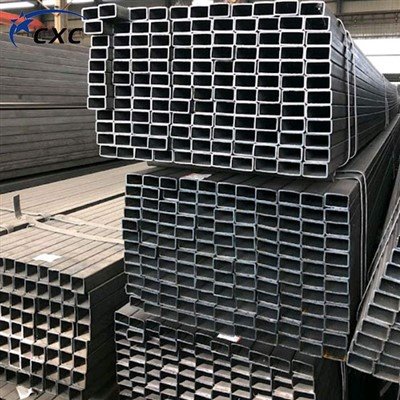
The first customer wanted ASTM A53 Black Steel Pipe for a factory expansion project.
The second wanted API 5L Black Steel Pipe for an oil transmission line.
Interestingly, both projects required the same outside diameter, similar wall thickness, and nearly identical quantities.
A week later, the first customer selected the lowest-priced supplier.
The second customer spent almost two weeks discussing manufacturing processes, inspection methods and material traceability before placing the order.
At first glance, it looked like one customer was overcomplicating the purchasing process.
Several months later, we learned the opposite was true.
The factory project encountered repeated welding adjustments because pipe dimensions varied between production batches. The oil & gas customer, although spending more time evaluating suppliers at the beginning, completed installation without material-related issues.
That experience reminded us of something we've learned after years of supplying Black Steel Pipe to customers around the world.
Buying steel pipe is easy. Buying the right steel pipe is much more difficult.
The difference isn't the quotation.
It's understanding how the pipe will actually be used.
Most Purchasing Mistakes Happen Before the First Quotation
When customers contact us, many already know the pipe size they need.
Some even provide complete technical drawings.
But one of the first questions we usually ask is something different.
"Can you tell us more about the project?"
Sometimes the answer changes the entire recommendation.
The same Black Steel Pipe may perform perfectly in an indoor mechanical workshop but become completely unsuitable for an outdoor coastal installation.
The drawing tells us the dimensions.
The application tells us everything else.
Step One: Understand Your Working Environment
Before discussing standards or material grades, we always recommend understanding where the pipe will operate.
Is it installed indoors?
Will it be exposed to rain or seawater?
Will it transport water, steam, oil or natural gas?
Will it experience high temperatures?
A customer once wanted to replace galvanized pipe with Black Carbon Steel Pipe because the price looked attractive.
After learning the pipeline would be installed outdoors in a coastal chemical plant, we advised them to reconsider.
The material itself wasn't the problem.
The operating environment was.
In our experience, the environment usually determines material selection long before the product catalogue does.
Step Two: Choose the Right Manufacturing Standard
One question we hear almost every week is:
"Which is better, ASTM A53, ASTM A106 or API 5L?"
Honestly, that's not the right question.
Each standard was created for different applications.
ASTM A53 Black Steel Pipe is widely used in structural work, mechanical systems and general industrial piping.
ASTM A106 Black Steel Pipe is typically selected for higher-temperature and higher-pressure service.
API 5L Black Steel Pipe is designed primarily for oil and gas pipeline systems where traceability and pipeline performance are critical.
When customers understand the project requirements first, choosing the appropriate standard usually becomes straightforward.
Step Three: Don't Judge a Pipe by Its Surface
This is probably one of the biggest misconceptions in the industry.
Many buyers naturally inspect the surface first.
That's understandable.
A smooth, uniform appearance certainly creates confidence.
But after spending years inside production workshops, we've learned something different.
The quality issues that affect customers most are usually invisible.
Dimensional consistency.
Wall thickness variation.
Straightness.
Residual stress.
Material stability.
These characteristics determine whether fabrication proceeds smoothly after delivery.
A beautiful-looking pipe that causes repeated machining adjustments is never a good purchase.
Step Four: Think About Fabrication Before You Buy
One purchasing manager once told us,
"We'll solve fabrication problems after the material arrives."
Unfortunately, that's usually the most expensive time to solve them.
Before ordering Black Steel Pipe, it's worth thinking through the complete manufacturing process.
Will the pipe be cut?
Bent?
Threaded?
Welded?
Powder coated?
Galvanized later?
We've found that customers who discuss these details before placing an order rarely encounter major production issues afterward.
Good suppliers should understand fabrication-not just pipe dimensions.
Step Five: Evaluate Manufacturing Consistency
Nearly every supplier can provide inspection reports.
The more important question is whether the same quality can be maintained month after month.
Several years ago, we worked with a machinery manufacturer that ordered steel pipes from three different suppliers.
All three complied with the same ASTM standard.
Only one consistently produced stable machining results.
The difference wasn't hidden in the inspection certificate.
It was hidden in production control.
Raw materials.
Forming accuracy.
Welding consistency.
Sizing.
Inspection discipline.
That's why we always encourage customers to evaluate the manufacturer's production capability, not just the finished product.
Step Six: Ask About Inspection Before Asking About Price
One thing we've gradually noticed is that experienced engineers rarely begin meetings by discussing cost.
Instead, they ask questions like:
Can you provide EN 10204 3.1 certification?
Do you perform hydrostatic testing?
Is ultrasonic testing available?
Can each production batch be traced?
Those questions tell us they understand something important.
Inspection isn't paperwork.
Inspection reduces manufacturing risk.
Choosing the correct inspection plan often saves much more money than negotiating another one or two percent off the purchase price.
Step Seven: Delivery Reliability Is Part of Quality
Many buyers separate delivery from product quality.
We don't.
A perfectly manufactured Black Steel Pipe that arrives three weeks late can stop an entire production line.
We've seen construction schedules delayed simply because material arrived after welding teams had already been mobilized.
Reliable production planning, stable inventory management and export experience are just as valuable as dimensional accuracy.
From the customer's perspective, quality begins when the order is placed-not when the truck arrives.
Step Eight: Choose a Supplier That Wants to Ask Questions
This may sound unusual, but we become slightly concerned when a supplier prepares a quotation within five minutes without asking anything about the project.
How can they recommend the right product if they don't understand the application?
At Wuxi Chengxingchuang Metal Products Co., Ltd., our sales engineers usually spend more time asking questions than introducing products.
What industry is the project for?
What pressure will the system operate under?
Will the pipe be welded on-site?
Which standard is specified by the project owner?
Those conversations sometimes take longer than preparing the quotation itself.
But they almost always lead to better material selection.
The Cheapest Pipe Is Rarely the Lowest-Cost Solution
One lesson we've learned repeatedly is that procurement cost and project cost are two completely different things.
Saving a few hundred dollars on material means very little if inconsistent dimensions increase fabrication time, delay installation or create additional inspection work.
The most successful customers we've worked with rarely buy the cheapest Black Steel Pipe.
They buy the one that allows the rest of their project to move forward without unnecessary surprises.
That's a much better investment.
Final Thoughts
Choosing the right Black Steel Pipe isn't about finding the strongest material or the lowest quotation.
It's about matching the pipe to the project's actual requirements.
Understanding the operating environment, selecting the correct manufacturing standard, evaluating supplier capability and considering the entire fabrication process will always produce better results than comparing prices alone.
After supplying Black Carbon Steel Pipes to construction companies, machinery manufacturers and energy projects for many years, we've reached a simple conclusion.
The best purchasing decision is rarely made after reading a catalogue.
It's made after asking the right questions.
And in our experience, those questions are often worth far more than the answers printed on a material certificate.