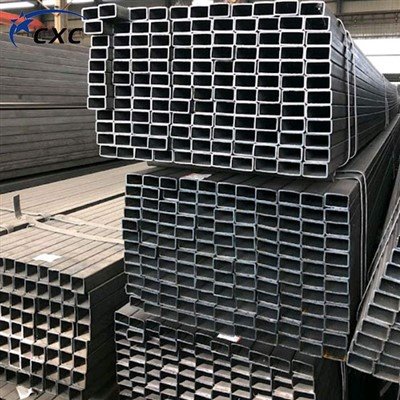
One of the emails that stayed with me came from a customer who manufactures skid-mounted process equipment.
He attached three quotations from different suppliers and asked a question that looked simple enough:
"All three are black steel pipes. One is ASTM A53, one is ASTM A106 Grade B, and the third is API 5L Grade B. Which one should we buy?"
If you've worked in purchasing for any length of time, you've probably faced the same situation.
The dimensions are identical.
The prices are different.
Every supplier insists their product is the right choice.
At that point, most buyers start comparing tensile strength, yield strength or chemical composition.
Ironically, that's usually where the confusion begins.
After working with Black Steel Pipe projects for many years, we've found that customers often focus on how these standards are different, when the better question is:
What was each standard originally designed for?
Once you understand that, choosing the right pipe becomes much easier.
They Are All Carbon Steel Pipes-But They Were Never Intended for the Same Job
One misconception we hear quite often is that ASTM A53, ASTM A106 and API 5L are simply different names for the same pipe.
They aren't.
Yes, all three can be supplied as Black Steel Pipe.
Yes, they may even have similar dimensions.
But the standards were created to solve different engineering problems.
Understanding that difference is much more useful than memorizing mechanical properties.
ASTM A53 – Designed for General Industrial Service
If we had to describe ASTM A53 Black Steel Pipe in one sentence, it would be this:
It's one of the most versatile carbon steel pipe standards available.
ASTM A53 is commonly used for:
- Structural applications
- Water pipelines
- Air systems
- Steam lines
- Mechanical fabrication
- Fire protection systems
One reason it's so widely used is its flexibility.
Depending on project requirements, it can be supplied as welded or seamless pipe.
We've supplied ASTM A53 Black Steel Pipes for commercial buildings, industrial plants and machinery manufacturers where the priority was reliable performance without unnecessarily increasing project costs.
For many general engineering applications, A53 simply makes sense.
Not because it's the strongest standard.
Because it matches the job.
ASTM A106 – Built for Higher Temperature and Pressure
The first time many customers hear about ASTM A106, they immediately assume it's a higher-grade version of A53.
That's only partly true.
ASTM A106 was developed primarily for high-temperature service.
Power plants.
Refineries.
Boilers.
Chemical processing equipment.
Pressure piping.
These are the environments where ASTM A106 Black Steel Pipe is most commonly specified.
A few years ago, one customer wanted to replace A106 with A53 simply to reduce material costs.
On paper, the savings looked attractive.
After discussing the operating temperature of the system, it became obvious why the project specification required A106.
The material wasn't selected because someone preferred a different standard.
It was selected because the service conditions demanded it.
Sometimes the standard tells you more about the working environment than the pipe itself.
API 5L – Developed for the Oil and Gas Industry
Whenever API 5L Black Steel Pipe appears on a drawing, we immediately know the conversation is probably moving toward pipeline projects.
Unlike ASTM standards, API 5L was specifically developed for transporting oil, natural gas and other fluids through pipeline systems.
That's its main purpose.
Although many customers compare API 5L Grade B directly with ASTM A53 Grade B, we've learned it's more helpful to compare the application rather than the material.
Pipeline engineers usually pay attention to different issues.
Long-distance reliability.
Weldability.
Pipeline integrity.
Traceability.
Project certification.
These requirements explain why API 5L remains the preferred choice for energy infrastructure around the world.
Why Prices Can Be Different Even When the Pipe Looks the Same
This is probably the question purchasing managers ask most often.
"The outside diameter is identical. The wall thickness is identical. Why is the price different?"
We've discussed this many times with customers.
The answer usually isn't hidden in the appearance of the pipe.
It comes from everything behind the product.
Manufacturing requirements.
Inspection procedures.
Testing methods.
Certification.
Traceability.
Applicable service conditions.
One project may only require a standard structural pipe.
Another may involve transporting high-temperature steam.
Another may become part of a cross-country oil pipeline.
Although the finished Black Steel Pipe may look similar, the engineering responsibility behind each standard is very different.
Don't Compare Standards Without Looking at the Project
One mistake we've seen repeatedly is trying to determine which standard is "better."
From an engineering perspective, that's the wrong comparison.
Asking whether ASTM A106 is better than ASTM A53 is a bit like asking whether a truck is better than a forklift.
The answer depends entirely on what you're trying to do.
We've supplied ASTM A53 Black Steel Pipes for machinery manufacturers where A106 would have provided no practical advantage.
We've also worked on projects where using A53 instead of A106 would have created unnecessary risks.
Likewise, API 5L Black Steel Pipe isn't automatically superior simply because it's associated with pipeline systems.
It's designed for a different purpose.
Choosing the right standard always starts with understanding the application.
Questions We Usually Ask Before Recommending a Standard
Whenever customers ask us which Black Steel Pipe they should purchase, we rarely answer immediately.
Instead, we ask questions.
Where will the pipe be used?
Will it carry pressure?
What operating temperature will it experience?
Is the project structural, mechanical or pipeline related?
Which inspection documents are required?
Will third-party inspection be involved?
Interestingly, once customers answer these questions, the appropriate standard often becomes quite obvious.
The discussion changes from comparing standards to solving engineering problems.
That's exactly how technical selection should work.
A Standard Doesn't Guarantee Good Manufacturing
This is another point that's worth mentioning.
Sometimes customers assume that once they've specified ASTM A53, ASTM A106 or API 5L, quality is automatically guaranteed.
Unfortunately, that's not always true.
Over the years, we've seen pipes manufactured under the same standard perform differently during fabrication.
The reason wasn't the specification.
It was manufacturing consistency.
Raw material selection.
Forming accuracy.
Welding quality.
Heat treatment.
Inspection discipline.
The standard establishes the minimum requirements.
The manufacturer determines how consistently those requirements are achieved.
That's why evaluating a Black Steel Pipe Manufacturer is just as important as selecting the correct standard.
Final Thoughts
Although ASTM A53, ASTM A106 and API 5L Black Steel Pipes may appear similar at first glance, they were developed for different engineering purposes.
ASTM A53 remains an excellent choice for general industrial, construction and mechanical applications.
ASTM A106 is intended for higher-temperature and pressure service where operating conditions become more demanding.
API 5L focuses on the safe and reliable transportation of oil, gas and other fluids through pipeline systems.
At Wuxi Chengxingchuang Metal Products Co., Ltd., we've found that the best material selection rarely begins with the question, "Which standard is better?"
It begins with a much more practical question:
"What exactly does this project require?"
Once that answer is clear, choosing the right Black Steel Pipe becomes far less complicated-and far more likely to deliver reliable performance throughout the life of the project.