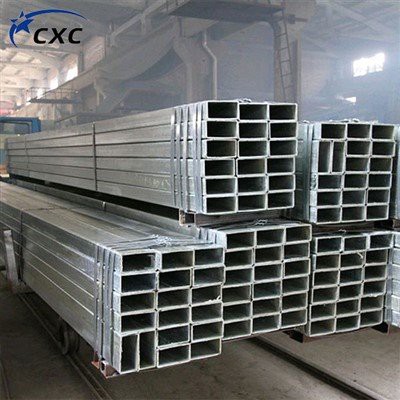

Alright, folks! As a supplier of Galvanized ERW Steel Pipe, I often get asked about the thermal conductivity of these pipes. So, let's dig into this topic and break it down in simple terms.
What's Galvanized ERW Steel Pipe?
First off, let's quickly go over what Galvanized ERW Steel Pipe is. ERW stands for Electric Resistance Welded. This means the pipes are made by rolling steel sheets into a tubular shape and then welding the edges together using electric resistance. The "galvanized" part refers to a process where the steel pipe is coated with a layer of zinc. This zinc coating acts as a protective shield, preventing the steel from rusting and corroding. It's like giving the pipe a suit of armor to keep it in good shape for a long time.
There are different types of galvanized steel pipes you might be interested in. For instance, Galvanised Metal Tubing is great for various general - purpose applications. If you're looking for something for industrial use, Galvanized Industrial Pipe is a solid choice. We also offer Pre Galvanized Steel Pipe, where the steel is galvanized before it's formed into a pipe, and Hot Dip Galvanized Steel Pipe, which has a thick and durable zinc coating. Galvanised Carbon Steel Pipe combines the strength of carbon steel with the corrosion - resistance of zinc.
Understanding Thermal Conductivity
Now, let's talk about thermal conductivity. In simple words, thermal conductivity is how well a material can transfer heat. If a material has high thermal conductivity, heat can move through it quickly. On the flip side, if the thermal conductivity is low, heat transfer is slow.
The thermal conductivity of a material is measured in units of watts per meter - kelvin (W/(m·K)). A higher value indicates better heat transfer capabilities. For example, metals generally have high thermal conductivity because their atomic structure allows electrons to move freely, which helps in transferring heat.
Thermal Conductivity of Galvanized ERW Steel Pipe
The thermal conductivity of Galvanized ERW Steel Pipe is mainly influenced by two things: the base steel and the zinc coating.
The base steel in these pipes typically has a thermal conductivity in the range of about 40 - 50 W/(m·K). This is because steel is a metal, and most metals are good conductors of heat. The free electrons in the steel's atomic lattice can carry thermal energy from one part of the pipe to another relatively easily.
The zinc coating on the Galvanized ERW Steel Pipe also has an impact on thermal conductivity. Zinc has a thermal conductivity of around 116 W/(m·K). However, the zinc layer on galvanized pipes is usually pretty thin. So, while it can contribute a bit to the overall heat - transfer ability of the pipe, its effect isn't as significant as the base steel.
In real - world applications, the actual thermal conductivity of a Galvanized ERW Steel Pipe can vary depending on factors like the thickness of the pipe wall, the diameter of the pipe, and the quality of the zinc coating. For example, a thicker pipe wall might slow down the heat transfer to some extent because the heat has to travel through more material.
Why Does Thermal Conductivity Matter?
Knowing the thermal conductivity of Galvanized ERW Steel Pipe is crucial in many applications.
In the HVAC (Heating, Ventilation, and Air Conditioning) industry, for example, these pipes are often used to carry hot or cold fluids. If the pipes have good thermal conductivity, they can efficiently transfer heat between the fluid inside the pipe and the surrounding environment. This is important for maintaining the right temperature in buildings and ensuring the HVAC system works effectively.
In the manufacturing industry, Galvanized ERW Steel Pipes might be used in heat exchangers. Here, the ability of the pipes to transfer heat quickly is essential for efficient heat exchange processes. If the thermal conductivity is too low, the heat exchanger won't work as well, and it could lead to higher energy consumption and lower productivity.
Factors Affecting Thermal Conductivity
Apart from the base steel and the zinc coating, there are other factors that can affect the thermal conductivity of Galvanized ERW Steel Pipe.
One factor is the presence of impurities in the steel. Impurities can disrupt the flow of electrons in the metal, which in turn reduces the thermal conductivity. High - quality steel with fewer impurities will generally have better thermal conductivity.
The manufacturing process also plays a role. If the welding process during the ERW pipe production is not done properly, it can create defects in the pipe structure. These defects can act as barriers to heat transfer and lower the thermal conductivity.
Measuring Thermal Conductivity
Measuring the thermal conductivity of Galvanized ERW Steel Pipe usually involves specialized equipment. One common method is the guarded hot - plate method. In this method, a sample of the pipe is placed between a hot plate and a cold plate. The heat flow through the sample is measured, along with the temperature difference between the two plates. Using these measurements, the thermal conductivity can be calculated.


Another method is the transient hot - wire method. Here, a thin wire is placed inside the pipe sample. An electric current is passed through the wire, which heats it up. The rate at which the temperature of the wire changes is measured, and from this, the thermal conductivity of the pipe can be determined.
Applications and Considerations
When choosing Galvanized ERW Steel Pipe for a specific application, it's important to consider the thermal conductivity requirements.
If you need a pipe for a high - temperature application where rapid heat transfer is essential, you'll want to look for pipes with good thermal conductivity. On the other hand, if you're using the pipe in a situation where heat loss needs to be minimized, you might need to take additional steps like insulating the pipe.
Conclusion and Call to Action
So, there you have it! The thermal conductivity of Galvanized ERW Steel Pipe is an important property that can impact its performance in various applications. Whether you're in the HVAC industry, manufacturing, or any other field that uses these pipes, understanding thermal conductivity can help you make better decisions.
If you're in the market for high - quality Galvanized ERW Steel Pipe, we're here to help. We've got a wide range of products, including Galvanised Metal Tubing, Galvanized Industrial Pipe, Pre Galvanized Steel Pipe, Hot Dip Galvanized Steel Pipe, and Galvanised Carbon Steel Pipe. Get in touch with us to discuss your requirements and start a procurement process. We're ready to offer you the best solutions for your projects.