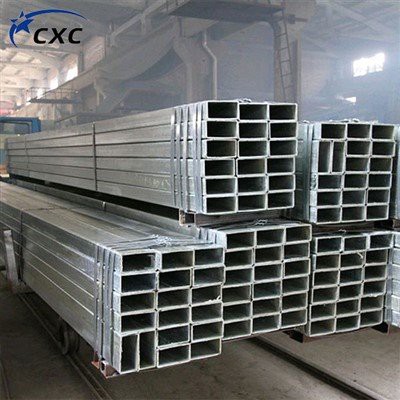

As a supplier of Galvanized Round Pipe, I often get asked about the galvanizing methods used for these pipes. Galvanized round pipes are widely used in various industries due to their corrosion resistance and durability. In this blog, I will delve into the different galvanizing methods employed for galvanized round pipes, their advantages, and how they contribute to the quality of the final product.
Hot - Dip Galvanizing
Hot - dip galvanizing is one of the most common and effective methods for galvanizing round pipes. This process involves immersing the steel round pipes in a bath of molten zinc at a temperature of around 450°C (842°F). Before immersion, the pipes go through a series of pre - treatment steps to ensure a clean and reactive surface.
The pre - treatment typically includes degreasing, pickling, and fluxing. Degreasing removes any oil, grease, or dirt from the surface of the pipes. Pickling is done using an acid solution, usually hydrochloric acid, to remove rust and scale. After pickling, the pipes are rinsed and then dipped in a flux solution. The flux helps to prevent oxidation of the steel surface and promotes the adhesion of zinc during the galvanizing process.
Once the pipes are properly pre - treated, they are lowered into the molten zinc bath. A metallurgical reaction occurs between the iron in the steel and the zinc, forming a series of zinc - iron alloy layers. The outermost layer is pure zinc, which provides a sacrificial coating that protects the steel from corrosion.
The advantages of hot - dip galvanizing are numerous. Firstly, it provides excellent corrosion protection. The zinc coating acts as a physical barrier between the steel and the environment, and even if the coating is scratched, the zinc will corrode preferentially, protecting the underlying steel. Secondly, hot - dip galvanizing offers long - term durability. Galvanized round pipes can last for decades in various environments, reducing the need for frequent replacements. Additionally, the process is relatively simple and can be applied to large - scale production. For more information on our Galvanized Industrial Pipe, which often uses hot - dip galvanizing, you can visit our website.
Electro - Galvanizing
Electro - galvanizing is another method used for galvanizing round pipes. This process is based on the principle of electroplating. The pipes are placed in an electrolyte solution containing zinc ions, and an electric current is passed through the solution. The zinc ions are attracted to the surface of the pipes and are deposited as a thin layer of zinc.
The electro - galvanizing process allows for precise control of the zinc coating thickness. The thickness can be adjusted according to the specific requirements of the application. This method is often used when a thinner and more uniform zinc coating is needed.
One of the main advantages of electro - galvanizing is the smooth and aesthetically pleasing surface finish it provides. The pipes have a shiny appearance, which can be desirable in certain applications, such as architectural and decorative uses. However, electro - galvanizing has some limitations. The zinc coating is generally thinner compared to hot - dip galvanizing, which means it may not offer the same level of long - term corrosion protection. Our Galvanized Hollow Pipe can be electro - galvanized for applications where a more refined look is required.
Sherardizing
Sherardizing is a less common but still effective galvanizing method for round pipes. This process involves heating the pipes in a closed container with zinc powder at a temperature between 350 - 450°C (662 - 842°F). The zinc vaporizes and diffuses into the surface of the steel, forming a zinc - iron alloy layer.
Sherardizing provides a uniform and adherent coating. The coating has good corrosion resistance and is also resistant to wear and abrasion. This method is suitable for small - diameter round pipes and components where a high - quality, uniform coating is required. Our Galv Square Steel Tubing can also be treated with sherardizing for specific applications.


Comparison of Galvanizing Methods
When choosing a galvanizing method for round pipes, several factors need to be considered. Cost is an important factor. Hot - dip galvanizing is generally more cost - effective for large - scale production, as the equipment and process are relatively simple. Electro - galvanizing may be more expensive due to the need for electrical equipment and precise control of the process.
Corrosion resistance is another crucial factor. Hot - dip galvanizing offers the best long - term corrosion protection, especially in harsh environments. Electro - galvanizing provides a thinner coating, which may be sufficient for less corrosive environments. Sherardizing offers good corrosion resistance and is suitable for applications where wear and abrasion are also concerns.
Surface finish is also important. Electro - galvanizing provides a smooth and shiny finish, which is ideal for decorative applications. Hot - dip galvanizing has a more textured surface, which may be acceptable for industrial applications.
Quality Control in Galvanizing
As a supplier of Galvanized Round Pipe, we pay great attention to quality control in the galvanizing process. For hot - dip galvanizing, we ensure that the pre - treatment steps are carried out correctly. The degreasing, pickling, and fluxing processes are monitored to ensure a clean and reactive surface. We also measure the thickness of the zinc coating using appropriate instruments to ensure it meets the required standards.
In electro - galvanizing, we control the current density, electrolyte composition, and plating time to achieve the desired coating thickness and quality. We conduct regular inspections of the pipes to check for any defects in the coating, such as blistering or uneven deposition.
For sherardizing, we carefully control the temperature and time in the closed container to ensure a uniform and adherent coating. We also test the corrosion resistance of the pipes using standard methods to ensure they meet the quality requirements.
Applications of Galvanized Round Pipes
Galvanized round pipes are used in a wide range of applications. In the construction industry, they are used for structural support, fencing, and scaffolding. Their corrosion resistance makes them suitable for outdoor use, where they are exposed to the elements. Our Galvanized Steel Pipes are widely used in construction projects.
In the automotive industry, galvanized round pipes are used for exhaust systems, chassis components, and other parts that require corrosion resistance. The durability of the galvanized coating ensures a long service life for these components.
In the manufacturing industry, galvanized round pipes are used for conveyor systems, machinery frames, and other applications where strength and corrosion resistance are important. Our Galvanized ERW Steel Pipe is often used in manufacturing due to its high - quality and cost - effectiveness.
Conclusion
In conclusion, there are several galvanizing methods available for round pipes, each with its own advantages and limitations. Hot - dip galvanizing is the most common and offers excellent long - term corrosion protection. Electro - galvanizing provides a smooth and aesthetically pleasing finish, while sherardizing offers good wear and corrosion resistance.
As a supplier of Galvanized Round Pipe, we are committed to providing high - quality products using the most appropriate galvanizing methods. If you are in need of galvanized round pipes for your project, we invite you to contact us for a detailed discussion about your requirements and how we can meet them. Our team of experts is ready to assist you in choosing the right galvanized round pipes for your specific application.