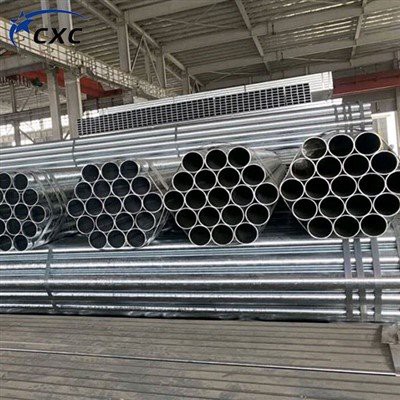

Hey there! As a supplier of Bright Square Steel Tube, I often get asked about the maximum load these tubes can bear. It's a crucial question, especially for those in construction, manufacturing, and other industries where the integrity and strength of materials are non - negotiable. So, I decided to dig deep into this topic and share what I've learned.
Understanding the Basics
First off, let's talk about what Bright Square Steel Tube is. It's a type of steel tube with a square cross - section that has been finished to a bright surface. This finishing process not only gives it an aesthetically pleasing look but also enhances its corrosion resistance.
The maximum load a Bright Square Steel Tube can bear depends on several factors. One of the most important ones is the material grade of the steel. Different grades of steel have different mechanical properties, such as yield strength and ultimate tensile strength. For instance, higher - grade steels generally have higher strength, which means they can bear more load.
Another factor is the dimensions of the tube. The wall thickness, outer diameter, and length of the tube all play a significant role. A thicker - walled tube will typically be able to withstand more load than a thinner - walled one of the same outer dimensions. And a shorter tube may be stronger than a longer one because it's less likely to buckle under load.
How to Calculate the Maximum Load
Calculating the maximum load can be a bit tricky as it involves complex engineering formulas. But I'll break it down as simply as possible.
The basic concept is to consider the tube's resistance to two main types of failure: yielding and buckling. Yielding occurs when the stress in the tube exceeds its yield strength, causing it to deform permanently. Buckling, on the other hand, happens when a long, slender tube bends or collapses under a compressive load.


For a tube under axial compression (a load applied straight along its length), we can use the Euler's buckling formula to estimate the critical buckling load. The formula is (P_{cr}=\frac{\pi^{2}EI}{(KL)^{2}}), where (P_{cr}) is the critical buckling load, (E) is the modulus of elasticity of the steel, (I) is the moment of inertia of the tube's cross - section, (K) is the effective length factor, and (L) is the length of the tube.
To calculate the moment of inertia (I) for a square tube, we use the formula (I=\frac{b^{4}-(b - 2t)^{4}}{12}), where (b) is the outer side length of the square tube and (t) is the wall thickness.
However, in real - world applications, we also need to consider other factors like the end conditions of the tube (whether it's fixed, pinned, or free), and the presence of any additional loads or stresses.
Real - World Examples
Let's look at some real - world scenarios to understand better. Suppose you're building a steel frame for a small shed. You might use a Bright Square Steel Tube with a relatively small outer dimension and a moderate wall thickness. In this case, the maximum load will mainly depend on the weight of the shed's roof and any snow or wind loads it might experience.
On the other hand, if you're working on a large - scale construction project like a high - rise building, you'll need much larger and stronger Bright Square Steel Tubes. These tubes need to support the weight of multiple floors, as well as the dynamic loads from things like earthquakes and strong winds.
Comparing with Other Steel Tubes
It's also interesting to compare Bright Square Steel Tube with other types of steel tubes. For example, Bright Round Steel Pipe has a circular cross - section. Round pipes are often better at withstanding internal pressure, but square tubes can be more stable when it comes to supporting loads in a framework.
Chair Gas Lift Cylinder Tube is another type of tube with a specific application. It's designed to handle the vertical movement and load of office chairs. While it may not need to bear as much load as a tube used in construction, it still needs to be strong and durable enough for its intended use.
Bright Rectangular Steel Tube is similar to the square tube but has a rectangular cross - section. In some cases, the rectangular shape may be more suitable for certain design requirements, but the same principles of load - bearing capacity apply.
Importance of Quality Control
As a supplier, I can't stress enough the importance of quality control. Ensuring that our Bright Square Steel Tubes meet the highest standards is crucial for determining their maximum load - bearing capacity. We perform various tests, such as tensile tests, hardness tests, and non - destructive testing, to make sure the tubes are of the best quality.
Conclusion
In conclusion, the maximum load that Bright Square Steel Tube can bear is a complex topic that depends on multiple factors, including material grade, dimensions, and end conditions. By understanding these factors, engineers and contractors can make informed decisions about which tube to use in their projects.
If you're in the market for high - quality Bright Square Steel Tube, or if you have any questions about load - bearing capacity, don't hesitate to reach out for a purchase consultation. I'm here to help you find the best solution for your needs.
References
- "Steel Design Handbook" by American Institute of Steel Construction
- "Mechanics of Materials" by R.C. Hibbeler