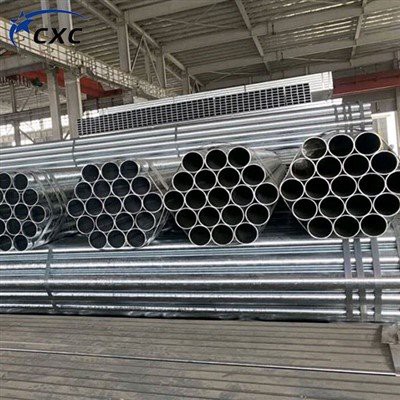

Hey there! As a supplier of custom galvanized pipes, I often get asked about the impact resistance of these pipes. It's a crucial factor, especially when you're using them in various applications. So, let's dive right into what impact resistance means for custom galvanized pipes.


What is Impact Resistance?
Impact resistance is all about how well a material can withstand sudden forces or blows without breaking or deforming. For custom galvanized pipes, this is super important because they're used in a ton of different situations where they might get hit or banged around. Whether it's in construction, plumbing, or industrial settings, these pipes need to be tough enough to handle whatever comes their way.
Factors Affecting Impact Resistance of Custom Galvanized Pipes
1. Galvanization Process
The way the pipes are galvanized plays a big role in their impact resistance. Galvanization is the process of coating the steel pipe with a layer of zinc to protect it from corrosion. There are two main types of galvanization: hot-dip galvanizing and pre-galvanizing.
Hot-dip galvanizing involves immersing the steel pipe in a bath of molten zinc. This creates a thick, durable zinc coating that adheres well to the steel. The thick zinc layer can absorb some of the impact energy, which helps improve the pipe's impact resistance. On the other hand, pre-galvanizing, which is done before the pipe is formed, usually results in a thinner zinc coating. While it still provides corrosion protection, it might not offer as much impact resistance as hot-dip galvanizing. You can learn more about Pre Galvanized Steel Pipe on our website.
2. Steel Quality
The quality of the steel used in the pipe is another key factor. High-quality steel has better mechanical properties, such as higher strength and ductility. Ductility is important because it allows the pipe to deform slightly under impact without breaking. When the steel is more ductile, it can absorb more energy before failing. So, when we're making custom galvanized pipes, we always use top-notch steel to ensure good impact resistance.
3. Pipe Thickness
The thickness of the pipe wall also affects its impact resistance. Thicker pipes generally have better impact resistance because they can withstand more force without deforming. However, it's important to find the right balance. If the pipe is too thick, it might be heavier and more expensive, and in some cases, it might not be necessary. We work with our customers to determine the optimal pipe thickness based on their specific needs.
4. Coating Integrity
The integrity of the zinc coating is crucial for maintaining impact resistance. If the coating is damaged or has defects, it can expose the underlying steel to corrosion and reduce the pipe's ability to withstand impacts. During the manufacturing process, we take great care to ensure that the zinc coating is uniform and free of defects. We also provide guidelines on how to handle and install the pipes to minimize the risk of coating damage.
Testing Impact Resistance
To ensure that our custom galvanized pipes meet the required impact resistance standards, we conduct various tests. One common test is the Charpy impact test. In this test, a notched specimen of the pipe is struck by a pendulum, and the energy absorbed during the fracture is measured. The higher the energy absorbed, the better the impact resistance of the pipe.
We also perform drop tests, where the pipes are dropped from a certain height onto a hard surface. This simulates real-world situations where the pipes might be dropped during handling or installation. By conducting these tests, we can identify any potential issues and make adjustments to the manufacturing process if needed.
Applications and Impact Resistance Requirements
Different applications have different impact resistance requirements. Let's take a look at some common applications and how impact resistance matters in each case.
1. Construction
In construction, custom galvanized pipes are used for structural support, plumbing, and electrical conduits. For structural applications, the pipes need to have high impact resistance to withstand the forces exerted during construction and throughout the building's lifespan. For example, in a high-rise building, the pipes need to be able to handle the weight of the building and any external forces, such as wind or seismic activity.
2. Plumbing
In plumbing systems, the pipes need to be able to withstand the pressure of the water flowing through them and any impacts that might occur during installation or maintenance. A pipe with good impact resistance is less likely to crack or leak, which can save a lot of time and money in the long run.
3. Industrial Settings
In industrial settings, custom galvanized pipes are used in a variety of applications, such as conveying fluids, gases, or solids. These pipes might be exposed to harsh environments and high levels of vibration, so they need to have excellent impact resistance. For example, in a chemical plant, the pipes need to be able to withstand the corrosive effects of the chemicals and any impacts that might occur during operation.
Benefits of High Impact Resistance in Custom Galvanized Pipes
1. Durability
Pipes with high impact resistance are more durable and can last longer. This means less frequent replacements, which can save you money in the long term. Whether you're using the pipes in a construction project or an industrial application, durability is a key factor.
2. Safety
High impact resistance also improves safety. In applications where the pipes are used for structural support or in high-pressure systems, a pipe that can withstand impacts is less likely to fail, which reduces the risk of accidents and injuries.
3. Cost-Effectiveness
While pipes with high impact resistance might be more expensive upfront, they can actually be more cost-effective in the long run. Because they last longer and require less maintenance, you'll save money on replacement and repair costs over time.
Conclusion
So, there you have it! The impact resistance of custom galvanized pipes is influenced by several factors, including the galvanization process, steel quality, pipe thickness, and coating integrity. By understanding these factors and conducting proper testing, we can ensure that our pipes meet the high standards required for various applications.
If you're in the market for custom galvanized pipes and want to learn more about their impact resistance or other properties, feel free to reach out to us. We're here to help you find the right pipes for your needs. Whether you need Galvanized Steel Pipes or Galvanized ERW Steel Pipe, we've got you covered. Let's start a conversation and see how we can work together to meet your requirements.