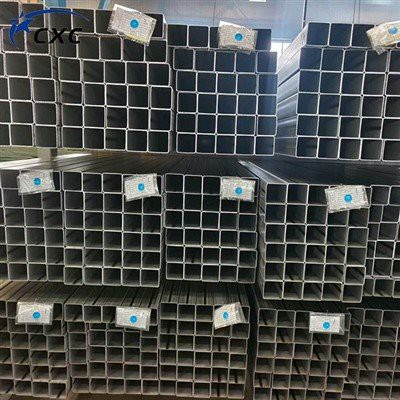

Can sq pipes be used in high - temperature applications? That's a question I get asked a lot as a sq pipe supplier. In this blog, I'm gonna break down whether square pipes are up for the challenge of high - temperature environments.
First off, let's talk about what we mean by high - temperature applications. These can range from industrial furnaces, where temperatures can soar into the thousands of degrees Fahrenheit, to exhaust systems in vehicles and power plants, which also experience elevated heat levels. The key factors in these scenarios are not just the high temperature itself but also how the heat affects the material properties of the pipes.
Types of Sq Pipes and Their Temperature Resistance
We offer a variety of square pipes, each with different characteristics. Let's start with the Galvanized Square Steel Pipe. Galvanized pipes are coated with a layer of zinc to protect against corrosion. But when it comes to high temperatures, the zinc coating has its limits. Zinc starts to melt at around 787°F (419°C). So, if the application involves temperatures higher than this, the galvanized coating will start to break down, losing its corrosion - protection properties and potentially causing issues with the pipe integrity over time.


Next up is the ZMA Square Steel Tube. ZMA stands for zinc - magnesium - aluminum alloy coating. This type of coating is more heat - resistant compared to traditional galvanized coatings. It can withstand relatively higher temperatures before the coating deteriorates. However, it's not invincible. Prolonged exposure to extremely high temperatures can still lead to degradation of the alloy coating and eventually affect the underlying steel.
The Cold Formed Square Steel Tube is made through a cold - forming process. Cold - formed steel has decent strength and is often used in a wide range of applications. But in high - temperature environments, the mechanical properties of cold - formed steel can change. As the temperature rises, the steel may start to lose its strength and ductility. For instance, at around 600 - 800°F (315 - 427°C), the yield strength of steel can start to decline significantly.
The ERW Square Steel Pipe is made using the electric resistance welding process. The welding area can be a weak point when exposed to high temperatures. The heat - affected zone near the weld can undergo microstructural changes, which may reduce the overall strength and integrity of the pipe. This is especially true for applications where the pipe is subject to both high temperatures and mechanical stress.
The Black Square Steel Pipe is uncoated, which means it's more susceptible to corrosion. In high - temperature applications, the corrosion rate can increase significantly, especially if there are other factors like moisture or chemicals in the environment. The steel may also oxidize more rapidly at high temperatures, forming rust and weakening the pipe structure.
Factors Affecting Sq Pipes in High - Temperature Applications
There are several other factors that can influence whether sq pipes can be used in high - temperature situations. One of the most important is the duration of exposure. Short - term exposure to high temperatures may not cause as much damage as long - term exposure. For example, in a batch - processing industrial furnace, the pipes may only be exposed to high heat for a limited period during each cycle. In such cases, materials that may not be suitable for continuous high - temperature use could still work.
The heat transfer rate is another crucial factor. If the pipes are in an environment where heat is transferred quickly, like in a forced - convection system, the pipes need to be able to handle rapid temperature changes. Sudden thermal expansion and contraction can cause stress on the pipes, leading to cracks or other forms of damage.
The presence of other chemicals or substances in the high - temperature environment can also have a big impact. For example, in a chemical plant, the pipes may be exposed to corrosive gases or liquids at high temperatures. These substances can react with the steel, accelerating corrosion and damaging the pipe.
Alternatives for High - Temperature Applications
While some of our sq pipes have limitations in high - temperature applications, there are alternatives. Stainless steel square pipes are a popular choice. Stainless steel has better heat resistance and corrosion resistance compared to regular carbon steel. It can withstand much higher temperatures without significant loss of strength. For extremely high - temperature applications, alloy pipes made from materials like nickel - based alloys can be used. These alloys are specifically designed to maintain their properties at very high temperatures.
Conclusion
So, can sq pipes be used in high - temperature applications? Well, it depends. Some of our square pipes, such as the Galvanized Square Steel Pipe and the Black Square Steel Pipe, have limited use in high - temperature scenarios due to coating degradation or corrosion issues. However, with proper consideration of factors like temperature range, exposure duration, and the presence of other substances, some sq pipes may still be suitable for certain high - temperature applications.
If you're looking for square pipes for high - temperature use or have any questions about our products, don't hesitate to reach out. Our team of experts is ready to help you find the right solution for your specific needs. Whether it's understanding the temperature - resistance capabilities of different pipe types or exploring alternative materials, we're here to assist. Contact us today to start a discussion about your procurement requirements.